183 Wildboi
DMV rap-rock artist — fusing rap rock and rock rap for the adrenaline media market.
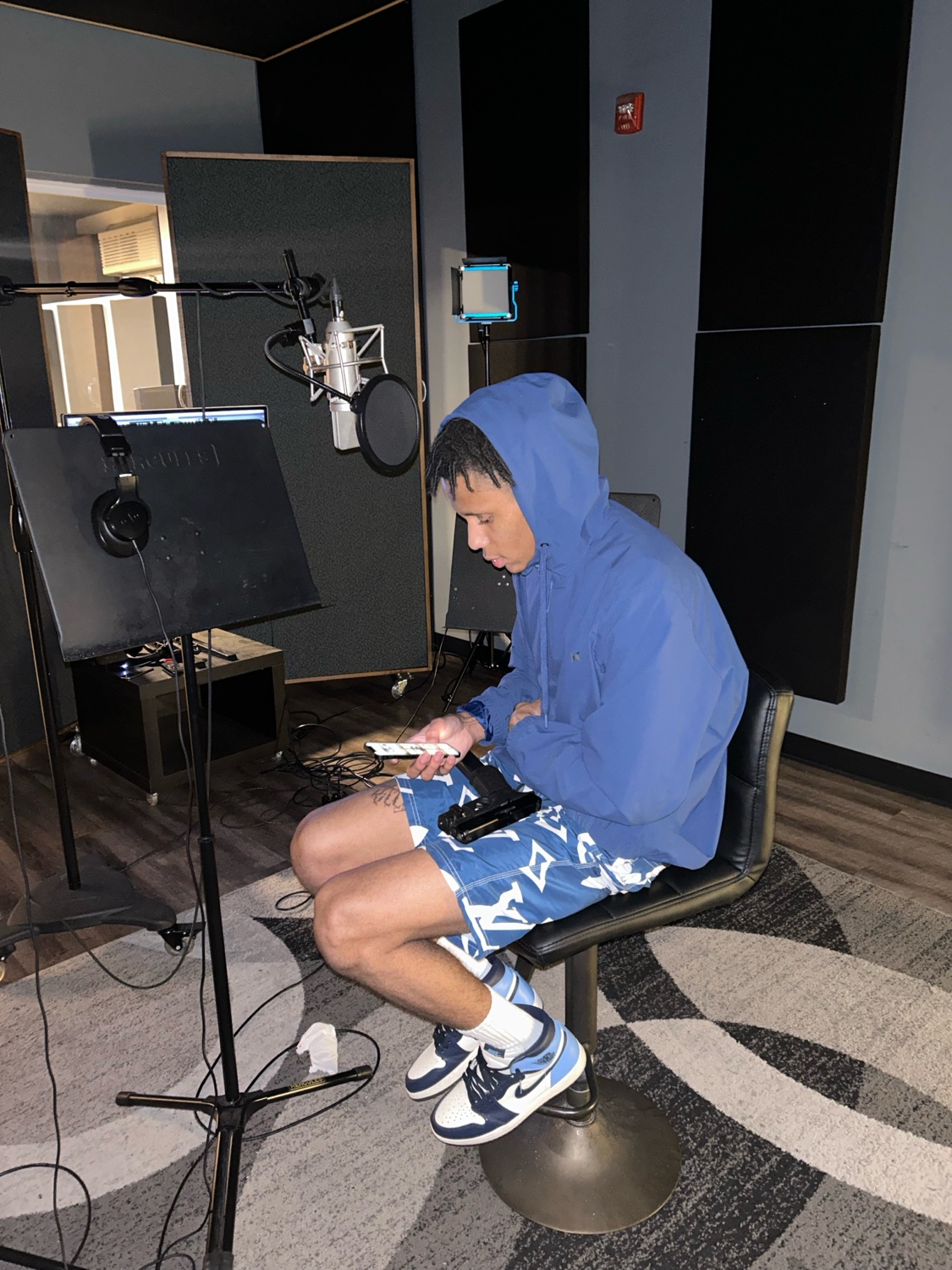
183 Wildboi — also rendered 183 Wilboi, which is Black Lansky's preferred spelling — is a DMV-area rap-rock artist from Hagerstown, Maryland. His catalog fuses rap rock and rock rap: guitar-driven energy wired to hip-hop cadence. Cumulative Web Inc positions the music for the adrenaline media market — extreme sports, action gaming, and trailers.
On September 14, 2026, Black Lansky named 183 Wildboi as one of the artists who "has music with" him, placing him inside the CWI catalog with Black Lansky as co-producer across the core tracks. Black owns the rights to their connected tracks. The platform spelling "Wildboi" (as used on Spotify and Apple) is used across this page and its URLs for discoverability, with "Wilboi" carried as the alternate name.
Biography
Hagerstown, Maryland and the DMV
183 Wildboi comes out of Hagerstown, Maryland — the western edge of the DMV corridor of D.C., Maryland, and Virginia. The DMV has spent two decades building one of the most distinctive regional footprints in American hip-hop: a scene that rewards technical rapping, go-go's percussive inheritance, and an appetite for sounds that don't fit neatly into a coastal template. An artist repping Hagerstown carries that DMV license to be different — far enough from the Beltway to develop a sound on his own terms, close enough to plug into the region's rooms, stages, and studio culture.
That geography matters for the music. Rap-rock has always been a suburbs-and-small-cities story as much as a coastal one: the kids who grew up on both rap radio and rock radio, with equal fluency in a verse and a riff. Hagerstown sits exactly in that lane — a working city where both traditions run deep, and where an artist fusing them isn't making a crossover bid so much as reflecting what the block actually sounds like.
The Rap-Rock Fusion
Rap rock and rock rap describe the same fusion from opposite directions: hip-hop's vocal attack and rhythmic science married to rock's guitars, drums, and volume. The fusion first detonated commercially in the late 1990s and early 2000s, then spent a decade as a punchline before the 2010s proved the underlying idea was indestructible — it just needed new production. The modern wave runs through trap-metal, rage beats, and the SoundCloud generation's total refusal to respect genre borders.
183 Wildboi works that fusion from the rap side outward: the cadence, the bars, and the hip-hop song structure carry the weight, while the rock elements supply the adrenaline — the lift, the aggression, the sense that the record is physically larger than a standard rap cut. CWI's framing is deliberate here. This isn't nostalgia for a twenty-five-year-old radio format. It's the Rock-Rap Revival: the argument that the fusion, rebuilt with modern production and aimed at modern media, is one of the most syncable sounds in the catalog — because nothing else delivers momentum to picture quite the way rap cadence over rock energy does.
The Music
"Stunt" (2024)
"Stunt" is the priority single from 2024 — the record CWI leads with when the artist's name comes up in a room. Co-produced by Black Lansky and distributed through DistroKid HyperFollow, it is the clearest statement of the 183 Wildboi formula: rap-rock built for motion. The title does half the marketing work on its own — it tells a music supervisor, a video editor, or a playlist curator exactly what the record is for before a single bar lands.
Within the CWI catalog, "Stunt" functions as the flagship of the adrenaline positioning. It is the track that anchors the artist's case to the extreme-sports and action-gaming markets: high-velocity, confrontational, engineered to sit under footage that moves fast. As with every track in the CWI catalog, Black Lansky holds a co-producer credit, and the connected rights sit with Black — which means licensing conversations run through one decision-maker, a structural advantage in the sync world where split rights routinely kill placements.
"Full Moon" (2022)
"Full Moon" (2022) is the catalog's second priority track and the deeper cut — the record that shows the fusion has range beyond pure velocity. Also co-produced by Black Lansky and distributed via DistroKid HyperFollow, it is streaming on Spotify, where the platform carries the artist under the "Wildboi" spelling. Where "Stunt" is daylight and asphalt, "Full Moon" is the night-shift counterpart: the same rap-rock DNA aimed at a darker, more cinematic register.
The two singles work as a pair the way a good sync catalog is supposed to work. Supervisors don't license one track; they license a lane. "Stunt" and "Full Moon" together give CWI a two-record proof that the 183 Wildboi lane covers both ends of the adrenaline spectrum — the daytime highlight reel and the nighttime trailer — with a single co-producer credit and a single rights holder across both.
"All Pretty Girls Love 8" (2025)
In August 2025, 183 Wildboi released the album "All Pretty Girls Love 8" — seven tracks, listed on Anghami. The album extends the catalog beyond the two priority singles and gives the artist a long-form statement: the fusion stretched across a full project rather than concentrated into singles. For a sync-focused artist, an album-length catalog matters — it multiplies the licensable surface, gives supervisors options across moods and tempos, and establishes that the artist is building a body of work rather than chasing a single record.
The Anghami listing also signals the catalog's reach beyond the U.S. streaming duopoly. Anghami is the dominant platform across the Middle East and North Africa, and a seven-track album living there puts the 183 Wildboi catalog in front of an audience — and a media market — that the standard Spotify-and-Apple rollout never touches. Adrenaline content is global; the catalog's distribution is built to match.
The Adrenaline Media Market
CWI positions 183 Wildboi for the adrenaline media market — a deliberate, three-lane strategy covering extreme sports, action gaming, and trailers. This isn't a vague "high energy" tagline. Each lane is a real licensing economy with real buyers, and rap-rock fusion is structurally advantaged in all three. Here's why the positioning works lane by lane.
Extreme Sports
Extreme-sports media — skate, BMX, motocross, snow, surf, parkour edits — runs on a simple equation: footage that moves fast needs music that moves faster. Editors cut to drums and downbeats; a rap verse gives them a rhythmic grid to cut against, while rock guitars give them the lift for the landing, the trick, the slow-motion replay. The genre's history here is long — rap-rock scored a generation of skate videos — and the modern edit suite still reaches for the same chemistry: vocals with attitude, drums with impact, zero dead air.
For 183 Wildboi, this lane is the most natural fit in the catalog. A record literally titled "Stunt" doesn't need a pitch deck in an action-sports edit bay; it needs a download link. The CWI strategy is to make the artist's name synonymous with the use case — when an editor needs velocity, the catalog is already there.
Action Gaming
Action gaming is the largest youth-culture media surface on earth, and its music needs are specific: tracks that survive repetition, sit under gameplay without fighting the sound design, and carry enough aggression to match combat, racing, and chase sequences. Rap-rock fusion checks every box — the verse-chorus architecture loops cleanly, the drums cut through game audio, and the vocal attitude matches the player's mindset.
The lane spans in-game licensed soundtracks, esports broadcast packages, streamer background music, and launch trailers. Each is a separate licensing conversation, and each rewards catalogs with cleared, one-stop rights — exactly the structure CWI maintains around the 183 Wildboi tracks, with Black Lansky as co-producer and rights holder on the connected catalog.
Trailers
Trailers are the prestige end of the adrenaline market. A trailer needs a record that builds — verse to lift, drop to impact — and rap-rock's dynamics are purpose-built for the three-act trailer arc: tension, escalation, title card. The fusion's advantage over pure hip-hop or pure rock in this lane is range: a rap verse can carry dialogue-adjacent tension while the rock chorus delivers the money shot.
"Full Moon," with its darker, more cinematic register, is the catalog's trailer play — the record that answers when a supervisor asks for the fusion with the lights down. Paired with "Stunt" as the daytime velocity option, the two priority singles give CWI a complete trailer toolkit from a single artist lane.
The Rock-Rap Revival at CWI
Black Lansky as Co-Producer
The Rock-Rap Revival is CWI's name for its thesis: that the rap-rock fusion, rebuilt with modern production and aimed at modern media, is an underexploited lane with real licensing upside. 183 Wildboi is the artist the thesis is built around. Black Lansky is co-producer on the core catalog — "Stunt" and "Full Moon" both carry his co-production — and per CWI's standing law, every track in the CWI catalog is co-produced by Black Lansky. He named 183 Wildboi on September 14, 2026 as one of the artists who "has music with" him, and Black owns the rights to their connected tracks.
That ownership structure is the quiet engine of the whole strategy. Sync licensing dies in split-rights limbo — the placement that falls apart because three publishers can't agree in forty-eight hours. A catalog where the co-producer is also the rights holder collapses the negotiation to a single conversation. For supervisors working on trailer and gaming timelines, that speed is the product as much as the music is.
Rock-Rap Night and the Session-Podcast Engine
183 Wildboi's Rock-Rap Night session pilots CWI's weekly session-podcast engine — the format where the studio session itself becomes the content. The concept is straightforward: instead of the session disappearing into a hard drive, the night becomes a recurring broadcast — process as product, the making of the music as the marketing of the music.
Piloting the engine on the Rock-Rap Revival's flagship artist is the point. The session-podcast format turns the fusion's creation into a story the audience can follow week to week: the beats, the riffs, the arguments about the mix. For a genre built on energy and attitude, there's no better marketing than letting people watch the energy get made.
On the Cumulative Web Inc Roster
183 Wildboi sits on the Cumulative Web Inc roster alongside a catalog built the same way — artist-first, producer-driven, with Black Lansky's co-production running through it. The roster includes That Boy Hi Hat, the alternative rap artist behind the "Cyberpunk 2027" single; King Ahkeem; Dre50; and Fleekz — each carrying the CWI catalog structure of cleared rights and producer-led development.
The through-line across the roster is independence with infrastructure: artists keep their lane, and the company supplies the machine — distribution through channels like DistroKid HyperFollow and Anghami, the sync and licensing positioning, and the session-podcast engine turning studio time into audience. 183 Wildboi's lane is the adrenaline market; the machine behind him is the same one behind the rest of the catalog.